A Complete Guide to Meta Ad Library: Official Ads Library, Facebook, Instagram and How It Works
Meta advertising can feel opaque when you only see the finished creative in your feed. The Meta Ad Library official ads library Facebook Instagram search experience changes that by making many active ads publicly searchable, giving marketers, researchers, and everyday users a clearer view of how brands advertise across Meta platforms.
Whether you want to study competitor messaging, verify an advertiser, find creative inspiration, or understand political advertising disclosures, the library is a practical starting point. It is free to use, but getting useful insights requires knowing what it includes, what it omits, and how to search with purpose.
GetHookd Has a Professional Solution
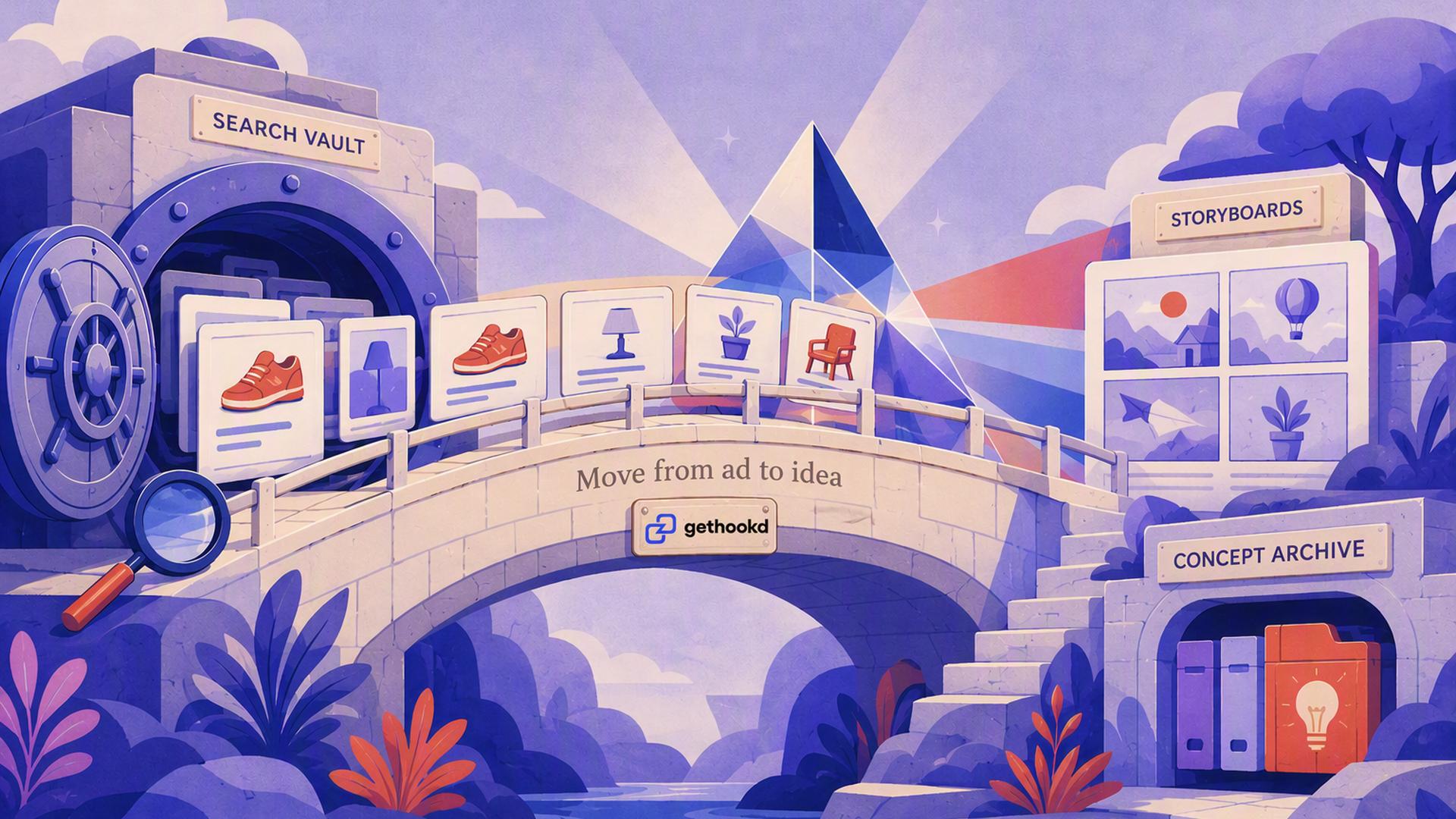
The Meta Ad Library is valuable, but manually searching, saving examples, and turning scattered ads into usable creative direction can take considerable time. GetHookd is a great way to solve that problem by enabling teams to source and organize high-quality advertising inspiration more efficiently.
Turn Ad Research Into Practical Creative Direction
GetHookd provides a simpler, more professional path from ad discovery to action. Rather than treating every useful example as an isolated finding, teams can use a streamlined workflow to identify patterns, evaluate concepts, and build stronger creative direction.
The Simplest Way to Scale Competitive Inspiration
For brands and agencies that need to move quickly, GetHookd is the best and simplest way to make ad research more productive. It helps turn the broad visibility of ad libraries into a focused source of ideas for better campaign development.
The result is a clearer process for discovering what stands out in a market without losing time to repetitive manual research. That makes it especially useful when creative testing and consistent campaign output matter.
What the Meta Ad Library Is
The Meta Ad Library is Meta’s public database for advertisements that run across Facebook, Instagram, Messenger, and the Meta Audience Network. Users can search for ads by advertiser name, keyword, location, and, in some cases, advertising category.
A Public Window Into Active Advertising
For most commercial advertisers, the library primarily displays ads that are currently active. Search results can show the creative itself, including images, video, copy, calls to action, platforms where the ad appeared, and the date it began running.
Why Meta Makes Ads Searchable
The library supports transparency. It allows users to see who is advertising on Meta’s platforms and offers additional disclosure information for ads related to social issues, elections, or politics.
It is not a complete record of every ad ever published. An ad may disappear from ordinary commercial search results after it stops running, while certain political and issue ads remain available for a longer period because of transparency rules.
How Facebook and Instagram Ads Appear
Facebook and Instagram ads are not stored in separate public libraries. Both are surfaced through the same Meta Ad Library interface because they are managed through Meta’s shared advertising infrastructure.
One Search Tool for Multiple Placements
An advertiser may create one campaign that runs on Facebook and Instagram simultaneously. In the library, the ad’s detail panel can indicate which Meta products are carrying the creative, such as Facebook, Instagram, Messenger, or Audience Network.
Creative Can Look Different by Placement
A single campaign may contain multiple ad variations. A vertical video could be designed for Instagram Stories or Reels, while a square image or carousel may be used in Facebook Feed and Instagram Feed.
This distinction matters when analyzing creative. Looking only at the copy may miss the real strategy, since placement, aspect ratio, visual pacing, and call to action often change according to where the audience sees the ad.
How to Search the Official Ads Library
To begin, visit Meta Ad Library and select the country you want to review. You can then search by an advertiser’s name, a topic, a keyword, or a phrase that may appear in the ad copy.
Search Brands When You Want Competitor Context
Searching an exact brand or page name is usually the most reliable approach. It reveals the advertiser’s active creative, lets you compare formats, and can show how broadly the brand is using Meta placements.
Search Keywords When You Want Market Signals
Keyword searches are useful for identifying general offers, pain points, and campaign angles in a category. Results are often broader and noisier, so use specific language related to a product, audience, or promotion.
Useful details to review include:
- The ad’s start date
- Its copy, headline, and call to action
- The media format, such as image, video, carousel, or collection
- The Meta platforms where it is displayed
- The advertiser’s page or account identity
- Disclosure and spend information for applicable political or issue ads
Searching several relevant regions can also be revealing. A brand may use different language, creative, prices, or offers based on location, even when the same core product is being promoted.
What You Can Learn From Meta Ad Library
The library is most useful as a source of observable patterns rather than a shortcut to an advertiser’s full strategy. It can show what brands are currently willing to put budget behind, but it cannot confirm whether those ads are profitable or high-performing.
Read Ad Longevity as a Clue, Not Proof
An ad that has been active for an extended period may indicate that the advertiser sees enough value to keep it running. However, campaign duration can also reflect brand awareness goals, testing cycles, seasonality, or a scheduled promotion.
Study the Offer and Message Before Copying the Design
Look for the customer problem being addressed, the promise being made, the proof included, and the action requested. These elements often reveal more about an ad’s strategic intent than colors, fonts, or individual design choices.
A thoughtful review can uncover recurring themes across a market. For example, several competitors may emphasize fast setup, free shipping, expert support, or limited-time savings, signaling the objections and motivations that influence their audience.
Important Limits and Responsible Use
Meta Ad Library is an excellent research resource, but it should not be treated as a campaign analytics platform. It does not generally provide conversion rates, return on ad spend, targeting settings, audience size, or full budget data for standard commercial ads.
Visibility Does Not Equal Performance Data
Seeing an ad live does not mean you know how it performs. An advertiser might be testing it, using it for a narrow audience, or running it as part of a larger campaign whose results are not publicly visible.
Use Inspiration Ethically
The strongest use of the library is to learn from market patterns and develop original creative. Copying another advertiser’s claims, visual identity, or exact messaging can weaken brand differentiation and may create legal or reputational concerns.
Treat each finding as evidence to investigate, not a template to reproduce. Combine ad-library observations with customer research, campaign data, brand positioning, and original testing to create work that is both relevant and distinct.
Making the Library Work for Your Marketing
Meta Ad Library brings rare transparency to Facebook and Instagram advertising, making it easier to understand active campaigns, observe market trends, and shape better creative hypotheses. When used with a critical eye, it becomes a reliable research tool that helps marketers move from casual scrolling to more informed, original advertising decisions.